How does Red Light Therapy work?

1. Mitochondria: the powerhouses

Mitochondria are found in almost every cell in our body, with hundreds or thousands per cell. They are true powerhouses that produce ATP (adenosine triphosphate), the molecule that supplies energy to all vital functions.

If the mitochondria work well, the body functions better too, because it is built entirely upon them.
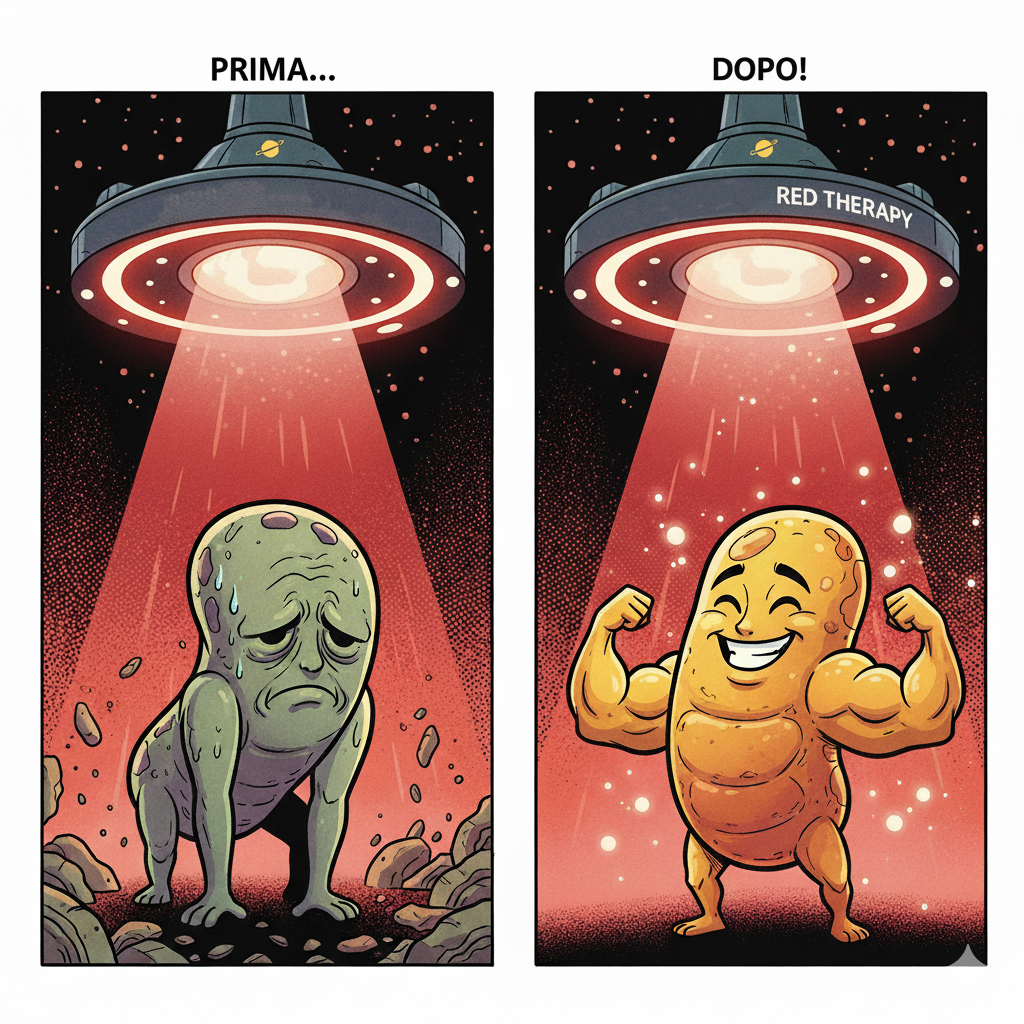
2. Red (and infrared) light as a source of energy

Red and near-infrared light are essential sources of energy for our bodies. Yet today we receive very little of it: we spend up to 90% of our time indoors, in cars, at work or at home.

The result? Mitochondria produce less ATP → less energy → a more fatigued and less efficient body.

3. Cellular recharging: therapeutic wavelengths

Providing mitochondria with the right wavelengths helps them breathe better and produce more energy.

  • Red light (610–760 nm): acts primarily on the skin, stimulating regeneration and well-being.
  • Near-infrared light (760–1,400 nm): penetrates deeply into muscles, joints, bones and organs.

Wavelengths between 630 and 850 nm are considered the optimal therapeutic window: effective, safe and without side effects.

4. Benefits for the body

More cellular energy means:

  • better tissue regeneration
  • more energy and overall vitality
  • reduced inflammation
  • faster recovery of muscles, skin, joints and even the immune system.

5. The benefits for everyday life

When cells have enough energy, the whole body functions better. Not just in sport or physical recovery, but also in everyday life: greater concentration, greater well-being, greater resilience.

And there’s no need to spend hours in the sun: just a few minutes in front of a Red Therapy panel is enough to reap the benefits, without exposure to harmful UV rays.

In summary: mitochondria + red light = more energy for every cell in your body.